
OPINION / EXPLAINER · English source edition
Violence in Soweto and Durban shows why migration policy must be argued with verified facts, lawful process and protection for every person.
A court judgment is written in legal language. A rumour about it can travel in a sentence. When that sentence tells people that their country has surrendered its borders, anger can move faster than the correction—and the cost can fall on a shopkeeper, a passenger or a family that never entered the argument.
Reuters reported on 8 October that anti-migrant protests in Soweto and Durban became violent. Its reporters witnessed looting in Soweto and burned vehicles in Durban. Police said additional officers were deployed. The South African government attributed the unrest to false claims about a Constitutional Court ruling on access to the asylum system. These are reported events and official explanations; they do not establish the motive or responsibility of every person present.
On 9 October, Reuters reported that Home Affairs withdrew the directive for receiving asylum applications, citing overwhelmed reception offices and safety risks. Officials still owe applicants a clear account of how lawful access will operate.
The government’s 8 October briefing says the judgment prevents asylum seekers from being excluded solely because of procedural barriers, such as irregular entry or a missed deadline. It does not automatically grant refugee status, permanent residence or a general right to remain. Applications must still be assessed on their merits. That distinction should have been communicated early, repeatedly and in language people could test for themselves.
The Daily Pulse’s judgment is straightforward: disagreement over migration policy cannot excuse collective punishment. Immigration law is enforced by the state. A person’s nationality does not make a shop, home or body an acceptable target. Violence also destroys the possibility of a serious policy debate by replacing evidence with fear.
Government has obligations on both sides of this argument. It must protect asylum seekers and other migrants from unlawful harm. It must also administer applications competently, explain delays and investigate fraud through due process. When offices are overwhelmed, silence creates a space in which invented explanations can thrive. Publishing verified processing information—without exposing applicants—would give the public something more reliable than a forwarded voice note.
Media organisations carry a similar responsibility. A dramatic video should not be presented as current until its location and date are checked. A claim about what a judgment “allows” should be compared with the judgment or an accountable legal explanation. Headlines should identify allegations as allegations. Corrections must reach the same audience as the error.
None of this means that citizens may not question migration policy, border administration or pressure on public services. Those are legitimate public questions. They become more useful when they name the decision, evidence and institution being challenged instead of assigning guilt to people because they are foreign.
The next official update should go beyond urging calm. It should report what happened, which incidents are under investigation, what protection has been provided, how asylum processing will operate and when the public will receive another update. Where police say arrests depend on sufficient evidence, the outcome must be reported later rather than treated as already decided.
A constitutional democracy is tested when anxiety is high. Its answer cannot be that law applies only after the street has chosen a target. The answer must be accurate information, equal protection and accountable enforcement—at the same time.
A useful public answer should identify the responsible institution, explain what evidence supports its position and give a date for the next update. Readers should be able to distinguish a promise from a completed action. When a question remains unresolved, the record should keep it visible rather than allowing a new headline to make it disappear.
Discussion question: What information would help communities debate migration policy without exposing asylum seekers or turning neighbours into suspects?
Reporting limit: This perspective relies on Reuters reporting and an official government briefing available on 10 October. It does not identify individual perpetrators or independently determine who created the false claims.
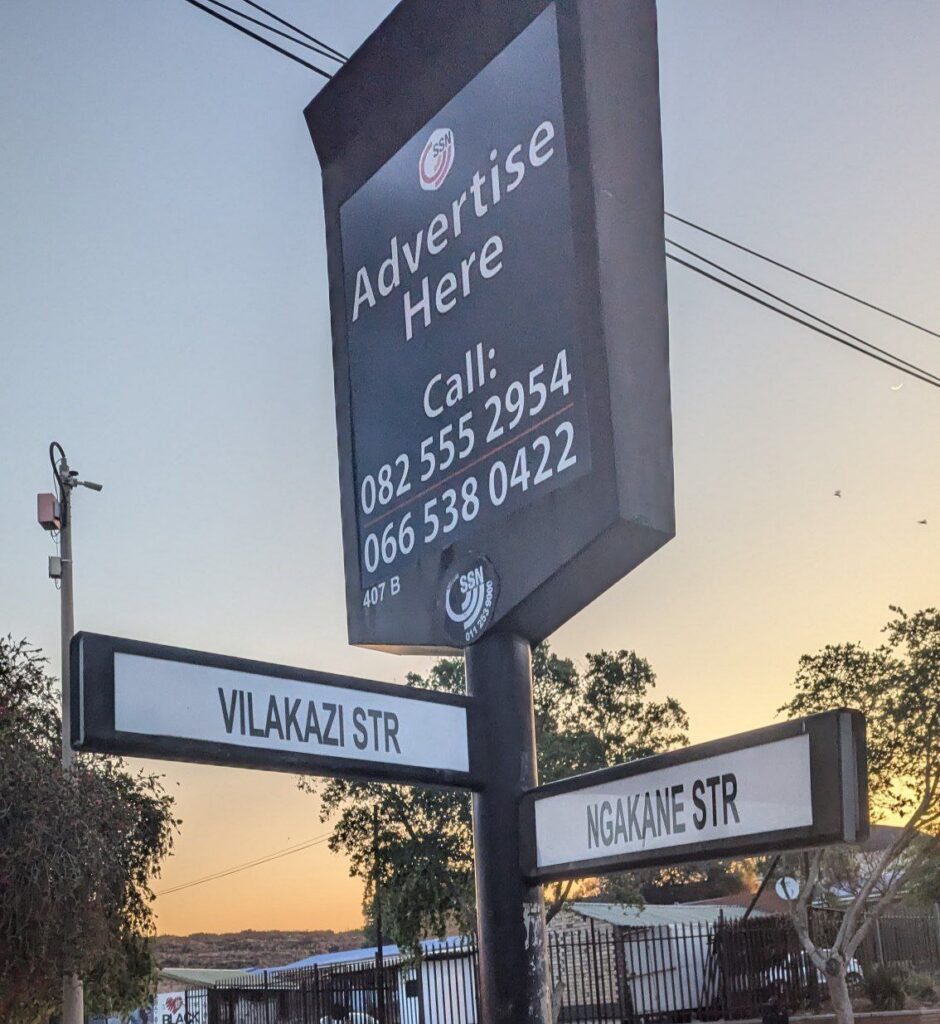
Archive photograph and credit
Original image · Rights record · CC BY-SA 4.0
Caption: Vilakazi Street in Soweto, photographed on 5 October 2024. Archive illustration of place; it does not show the October 2026 protests, violence or any person discussed in this article. Photograph: Khajitdadddy/Wikimedia Commons, CC BY-SA 4.0. Disclose any crop or other alteration.
Sources
Reuters, 8 October 2026 — South Africa blames disinformation as anti-migrant protests turn violent


Join the conversation