
OPINION / SPORT · English source edition
CAF is reconsidering the move to a four-year Africa Cup of Nations cycle. The decision should account for supporters, players, domestic football and host communities.
The Africa Cup of Nations is more than a date in an administrator’s calendar. For a supporter, it can mean saving for a journey or arranging leave from work. For a player, it can mean a rare chance to represent a country at the highest continental level. For a host city, it can mean years of promises that must still make sense after the final whistle.
Reuters reported on 9 October that Confederation of African Football president Patrice Motsepe said CAF was discussing a return to staging AFCON every two years. In December, CAF had announced tournaments in 2027 and 2028, followed by a four-year interval, partly to accommodate a proposed annual Nations League. Motsepe’s latest remarks signal a review; they are not yet a confirmed new competition schedule.
The debate should not be reduced to whether “more football” is automatically better. A two-year AFCON offers more frequent national moments and more opportunities within a player’s relatively short career. A four-year cycle may promise scarcity, planning space and commercial concentration. An annual Nations League could create regular fixtures, but its value would depend on format, travel burden, broadcasting access and whether every region can participate meaningfully.
United Africa Today’s view is that CAF should publish the decision criteria before it publishes another calendar. Supporters should know how player welfare, domestic leagues, women’s football, qualifying travel, broadcast reach, host readiness and revenue distribution are being weighed. A schedule explained only as more lucrative would be incomplete because the institution exists to govern football, not merely inventory.
Stability matters. National associations plan qualifying programmes. Clubs negotiate release and recovery for players. Broadcasters, vendors and transport providers commit resources. Families decide whether a tournament is affordable. Reversing a decision is not necessarily failure; refusing to explain the evidence behind repeated changes would be.
The conversation must also avoid pretending there is one African supporter experience. A fan travelling across a land border, a diaspora supporter flying home and a viewer relying on free-to-air coverage face different barriers. CAF can hear them through published consultations, supporter associations and national federations. That process should disclose who participated and which concerns changed the proposal.
Player voices belong in the same record. Tournament frequency interacts with qualifying windows, club seasons and recovery. We should not invent a consensus on their behalf. CAF and national associations should publish structured player feedback, including women players whose competitions are too often treated as a separate administrative afterthought.
Host communities deserve a legacy test. The question is not simply whether stadiums were full. It is whether temporary work was fairly organised, facilities remain usable, transport improvements serve residents and public spending can be examined. A more frequent tournament multiplies both the opportunity and the obligation.
For supporters, the basic request is simple: give us a calendar we can understand, evidence we can examine and enough stability to plan our lives around the game we love. AFCON’s importance will not be protected by scarcity alone or frequency alone. It will be protected by trust.
A useful public answer should identify the responsible institution, explain what evidence supports its position and give a date for the next update. Readers should be able to distinguish a promise from a completed action. When a question remains unresolved, the record should keep it visible rather than allowing a new headline to make it disappear.
Discussion question: Should AFCON be held every two or four years—and what evidence should CAF publish before deciding?
Reporting limit: CAF’s president said the cycle was under discussion. This perspective does not present a return to a two-year cycle as a final decision and does not claim a surveyed consensus among supporters or players.
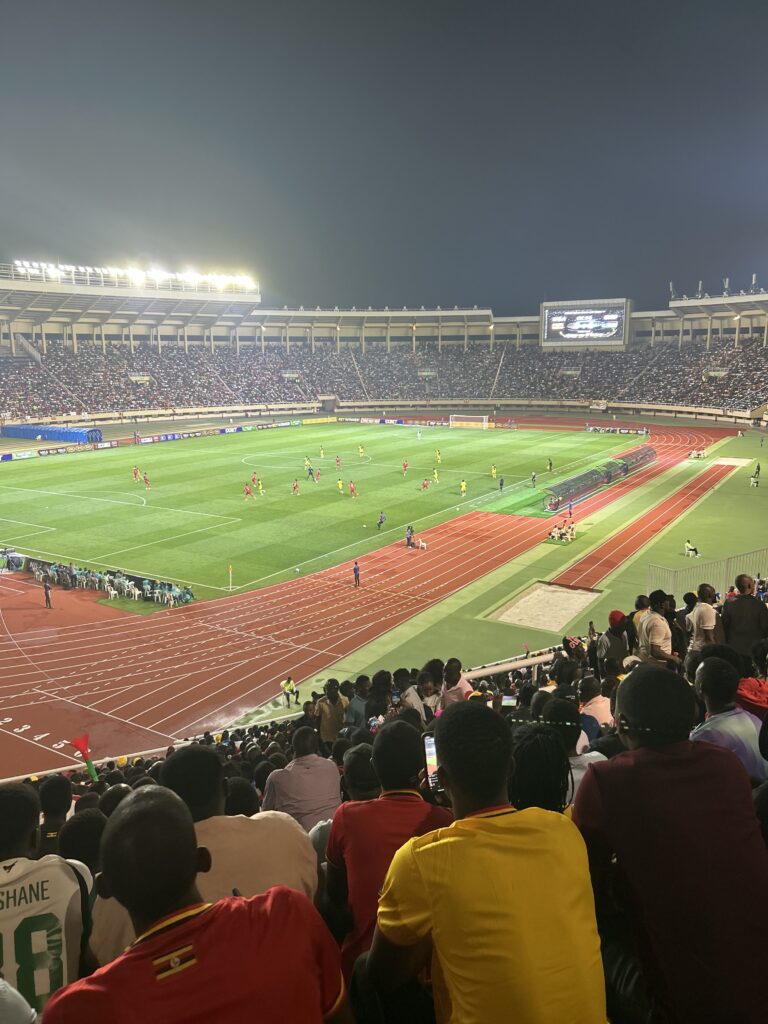
Archive photograph and credit
Original image · Rights record · CC0 1.0
Caption: Uganda supporters at Namboole Stadium during an AFCON qualifier against South Sudan on 11 October 2024. Archive illustration of supporter culture; it does not depict CAF’s October 2026 strategy meeting. Photograph: Owobusingye/Wikimedia Commons, dedicated to the public domain under CC0 1.0.
Sources
Reuters, 9 October 2026 — CAF reviewing the four-year AFCON decision
CAF, 10 October 2026 — strategy conference discussion of African football development





Join the conversation