
OPINION · English source edition
Nigeria's stronger public revenues invite a practical question for Lagos: which services will make a day's work more affordable?
Before a growth figure becomes reassuring, it needs to survive a simpler calculation: after the costs of doing business, what remains? That is the lens through which Lagos should read Nigeria's latest economic assessment.
The World Bank's 8 October update says Nigeria's economy expanded by 4.2 per cent in the first half of 2026. It also says inflation continues to erode household purchasing power. Its state-finance analysis reports a 93 per cent rise in aggregate state revenues in real terms between 2023 and 2025, with capital spending taking a larger share of expenditure. These are national and combined-state findings. They do not establish Lagos's individual revenue growth or the experience of any particular market.
The distinction matters. A country can produce more while a small business struggles to afford its next order. A state can spend more while residents remain unsure which completed service the money bought. Both possibilities deserve examination rather than being assumed.
For Lagos, we propose measuring economic progress through the cost and reliability of an ordinary working day. Begin with movement: how long does a supplier or customer need to reach a market, and how predictable is that journey? Then look at usable power, waste collection, drainage, access to water and the clarity of charges. These are proposed questions for local reporting, not findings from interviews conducted for this article.
A business does not experience those systems in separate budget chapters. It meets them in the same cashbook. An improvement in one service may be consumed by another rising expense. That is why a ribbon-cutting photograph, however attractive, cannot demonstrate the net effect on livelihoods.
There is a workable way to make the discussion more precise. A voluntary, anonymised panel of businesses in a named Lagos market could record the same categories of operating costs over time. Participation should include different business sizes and activities, with the method published. Personal financial records must remain private. Such a panel would describe its participants; it should never be presented as representing every Lagos trader.
Government reporting could then meet that evidence halfway. Each relevant project should identify its location, responsible agency, cost, completion status and intended service improvement. Residents should be able to compare a spending promise with a functioning result and ask for an answer when the two diverge.
This is not an allegation that Lagos's spending has failed. The sources reviewed here do not establish that conclusion. It is an argument for evaluating the promise of stronger public finances at the point where people work.
The World Bank's update offers a reason to ask harder questions, not permission to declare that households are already comfortable. Public revenue creates choices. Citizens deserve to understand those choices and their practical consequences.
Our next Lagos story should therefore return with a specific service, a documented spending record and clearly attributed experiences from the people using it. Until then, the honest headline is a test we intend to apply: does public investment leave a business with a more dependable day and a better chance of staying open?
A useful public answer should identify the responsible institution, explain what evidence supports its position and give a date for the next update. Readers should be able to distinguish a promise from a completed action. When a question remains unresolved, the record should keep it visible rather than allowing a new headline to make it disappear.
Useful next step: Keep a private seven-day record of transport, energy and other operating expenses. Compare like with like; avoid publishing personal accounts or treating one diary as a citywide trend.
Reporting limit: No Lagos-specific budget audit, trader survey or original interview underpins this opinion.
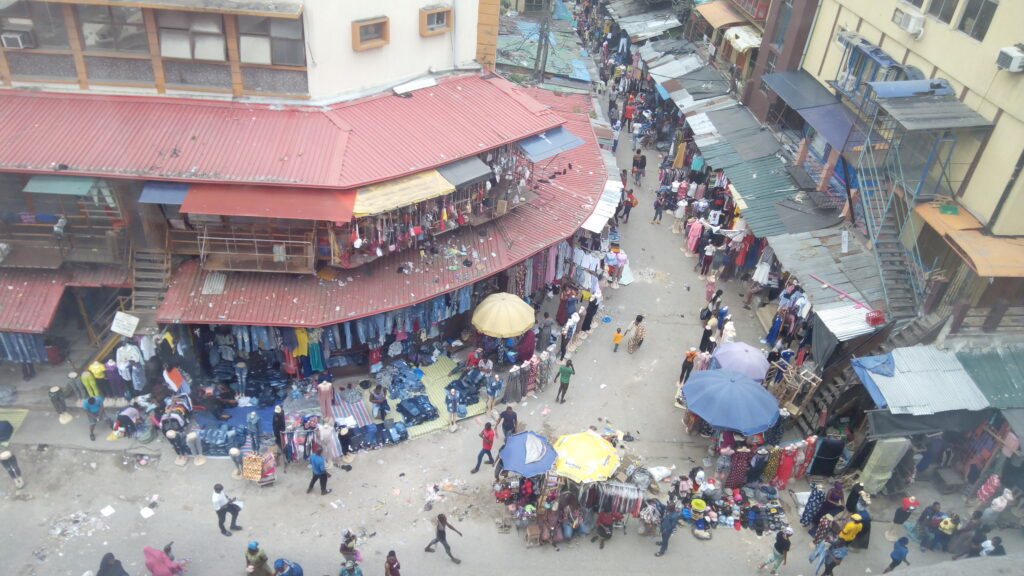
Archive photograph and credit
Original photograph · Rights record · CC BY-SA 4.0.
Caption: Balogun Market, Lagos Island, photographed on 22 October 2017. Archive illustration; the image does not document current trading conditions or identify participants in this article. Photograph: Yellowcrunchy/Wikimedia Commons, CC BY-SA 4.0. Original image; disclose any later crop or other alteration.



Join the conversation