
OPINION / BUSINESS EXPLAINER · English source edition
Currency pressure begins as a financial-market story but reaches shops through replacement costs, transport, energy and difficult pricing decisions.
A trader does not need to exchange dollars personally to feel a weaker shilling. The effect can arrive through the next wholesale order, a transport bill, an imported component or the price a supplier is no longer willing to guarantee.
Reuters reported on 8 October that Uganda’s shilling was expected to remain under pressure as businesses sought dollars ahead of the year-end trading period and energy costs remained a concern. The report said the Bank of Uganda did not intend to defend one fixed exchange-rate level, although it retained tools to manage excessive volatility. This is a market expectation, not a certainty about the currency’s next movement.
Uganda’s Ministry of Finance reported that the shilling depreciated by 0.7 per cent against the US dollar in August, averaging 3,730.25 shillings per dollar, as foreign-exchange demand from energy and manufacturing exceeded specified inflows. The same official update put annual headline inflation at 4.1 per cent in August. Those national figures do not describe the accounts of a particular Kampala business.
The useful question is therefore not whether every price must rise. It is which costs are exposed, when they are repriced and who carries the uncertainty. A business selling locally produced food may face a different chain from one relying on imported equipment. Even two traders in Nakasero Market may have different suppliers, credit terms and stock cycles. One example should not be turned into a citywide conclusion.
Our editorial proposal is a replacement-cost test. Before changing a price, a business can separate what it paid for existing stock from what it has been quoted for the next order. It can record the quote’s date and validity period, transport and financing costs, and whether any component is actually denominated in foreign currency. This will not remove pressure, but it can prevent a frightening headline from becoming an automatic price increase.
Public communication should be equally practical. Central-bank statements often speak to markets in technical language. Small firms need a plain explanation of what the bank is watching, what “excessive volatility” means in practice and where verified exchange-rate information can be found. Government should also show how energy and import costs are feeding into essential supply chains rather than treating the exchange rate as an isolated number.
Lenders and large suppliers have choices too. Shorter quote-validity periods, transparent adjustment clauses and local-currency options can distribute risk more fairly than a surprise demand at delivery. These are proposals for business practice, not claims that all Kampala suppliers currently behave in the same way.
Consumers deserve honesty without manipulation. A seller should be able to explain a price change with a dated cost, while buyers should be able to ask whether the product was purchased before or after the claimed increase. That conversation is imperfect, but it is better than suspicion on one side and silence on the other.
A weaker currency can become an excuse for indiscriminate repricing. It can also become a reason to examine where a business is genuinely vulnerable and where local sourcing, shared purchasing or clearer contracts can help. Kampala’s livelihoods deserve that more precise conversation.
A useful public answer should identify the responsible institution, explain what evidence supports its position and give a date for the next update. Readers should be able to distinguish a promise from a completed action. When a question remains unresolved, the record should keep it visible rather than allowing a new headline to make it disappear.
Useful next step: Record three dated supplier quotations for the same essential input. Note the currency, validity period and delivery cost before deciding whether a retail-price change is justified.
Reporting limit: This perspective contains no original interviews or Kampala-wide cost survey. It does not predict the shilling’s future value.
Archive photograph and credit
Original image · Rights record · CC BY-SA 4.0
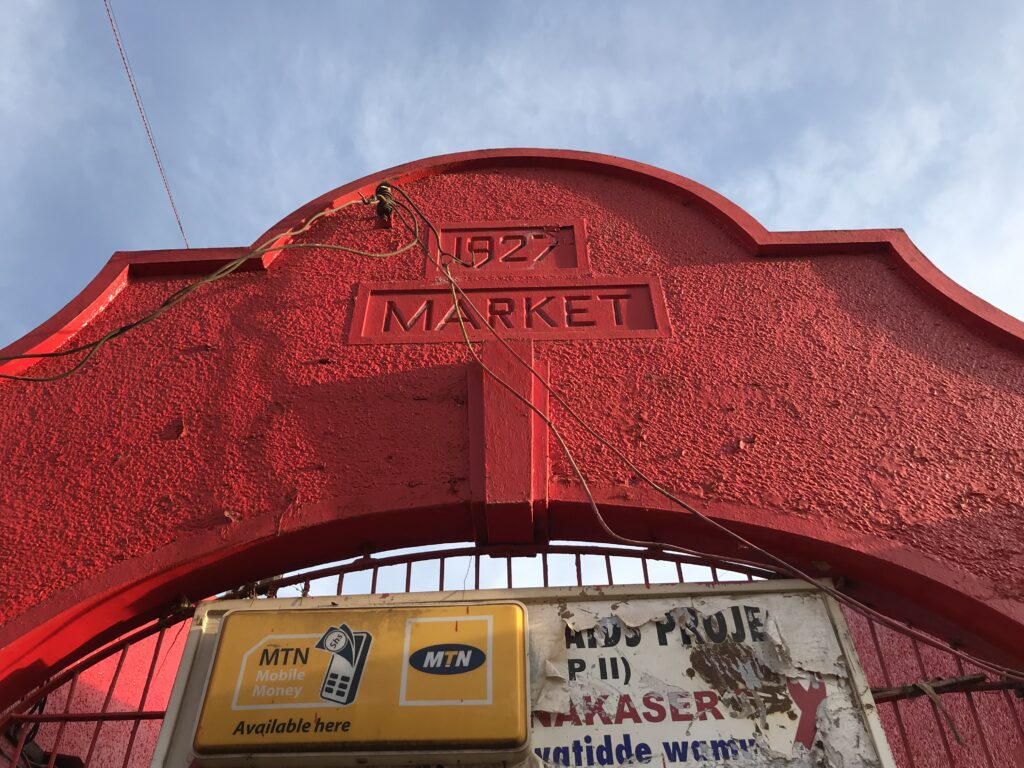
Caption: Nakasero Market in Kampala, photographed on 22 April 2019. Archive illustration; the photograph does not document current prices, currency trading or the experience of a person interviewed for this article. Photograph: Jim Joel/Wikimedia Commons, CC BY-SA 4.0. Disclose any crop or other alteration.
Sources
Reuters, 8 October 2026 — Uganda’s currency expected to remain under pressure
Uganda Ministry of Finance, August 2026 Performance of the Economy report, published September 2026






Join the conversation