
OPINION · English source edition
Renewed accusations between neighbouring governments demand a public account of how civilians will be protected.
A family should not have to understand a military communiqué to work out whether it can reach a hospital. That is the question governments and regional mediators should put at the centre of the renewed crisis involving Ethiopia and Eritrea: what can people safely do today, and who will tell them when that changes?
On 9 October, Reuters reported that Ethiopia accused Eritrea of an invasion. Eritrea's information minister accused Ethiopia of aggression; his response did not address the specific deployments alleged in the Ethiopian letter. Reuters also reported witness accounts of Eritrean soldiers inside Ethiopia. These are materially different kinds of evidence: government accusations, a government response and witness reporting. None supplies a complete picture of civilian safety.
On 10 October, Reuters reported that Eritrea had asked the UN Security Council to intervene and denied the alleged incursion. Reuters said it could not independently verify that incursion. A diplomatic escalation does not tell residents which services are safe to reach; that practical information still needs its own verified public record.
The African Union Commission called for restraint on 1 October. In a separate 2 October statement, Amnesty International urged an emergency AU session and reported concerns including shelling, airstrikes and forced conscription. Those reports warrant investigation; they are not judicial findings against particular individuals.
Our argument is that civilian protection needs a visible timetable alongside diplomacy. A statement promising restraint should be followed by practical information: which civilian services are functioning, where humanitarian access has been requested or obstructed, and when the next independently checked update will appear.
Such a record must protect people as well as inform them. Publishing the precise locations of vulnerable families, aid movements or witnesses can create danger. A useful public update would therefore describe access and service availability without exposing individuals or sensitive routes. Uncertainty should be written plainly. A service confirmed open yesterday should not be presented as safely accessible today without another check.
Communication itself belongs in the protection plan. When people cannot verify a warning, a rumour can become their only guide. Authorities should explain disruptions and allow independent reporting. Media organisations, including ours, should date every update, distinguish eyewitness material from official claims and correct mistakes where readers can see them.
There is also a responsibility beyond the immediate border dispute. Regional diplomacy should report what it is seeking, what commitments have been made and whether those commitments have been independently observed. Negotiations may require confidentiality. Their humanitarian purpose should still be legible to the people whose lives depend on them.
We do not ask readers to settle competing territorial claims from a headline. Nor should every new official accusation become an invitation to condemn an entire population. Accountability concerns decisions, commands and conduct. Nationality does not make a civilian responsible for a government's actions.
The immediate public test is therefore modest and demanding: can a person get trustworthy information about essential services, seek help without being exposed, and know who is responsible for answering an urgent protection request? A protection plan that nobody can use is a promise on paper.
A useful public answer should identify the responsible institution, explain what evidence supports its position and give a date for the next update. Readers should be able to distinguish a promise from a completed action. When a question remains unresolved, the record should keep it visible rather than allowing a new headline to make it disappear.
Discussion: What information should a civilian protection update contain, and what must remain confidential to keep people safe?
Reporting limit: This argument draws on sources available through 10 October. It does not establish a comprehensive casualty total, territorial map or independently verified account of every deployment.
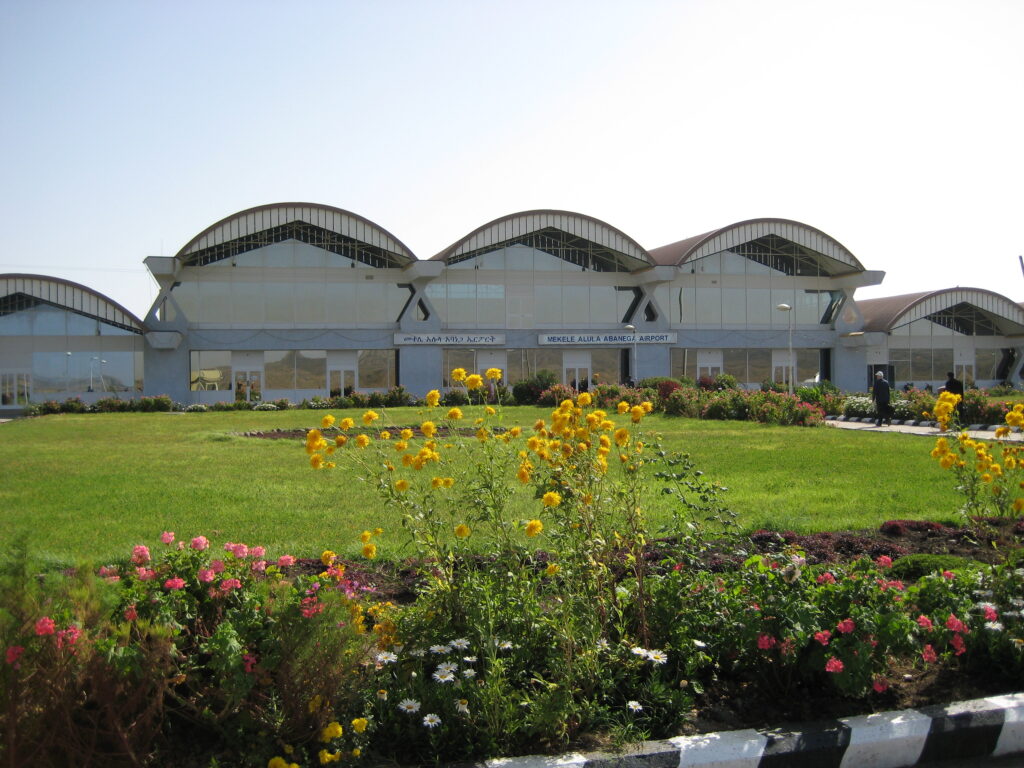
Archive photograph and credit
Original photograph · Rights record.
Caption: Mekelle Airport, photographed on 20 May 2008. Archive illustration of civilian infrastructure; this photograph does not show the current conflict or establish the airport's present condition. Photograph: Simon Temple, released into the public domain by the photographer.
Sources
Reuters, 9 October 2026 — competing Ethiopian and Eritrean accusations.
African Union Commission, 1 October 2026 — restraint and regional tensions.
Amnesty International, 2 October 2026 — call for emergency AU consideration.



Join the conversation